_edited.png)
Young People: A Challenge Worth Facing
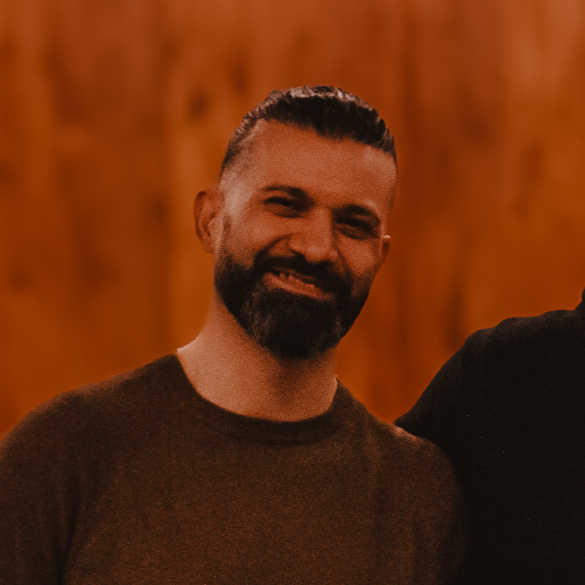
If you ever visit the Chinese Evangelical Church in Mestre–Venice, you’ll immediately feel that something special is happening there. It’s one of those places where different worlds meet — faith, culture, migration, and new generations all woven together in one vibrant community.

The youth group is impressive — around sixty young people. But what’s even more impressive is the variety of their stories. Some were born in Italy and speak Italian like any of their friends at school. Others arrived when they were little, growing up between two languages and two ways of seeing the world. Then there are those who came more recently from China, following their families who started small businesses in the Venetian area.
You can imagine what happens when all these worlds collide in one church. There are differences in how people speak, pray, or even imagine God. But there’s also a sense of curiosity, creativity, and belonging that you don’t find everywhere. The church itself now refers to the Italian-born youth as “the Italian group” — a small but powerful sign that a new identity is taking shape inside the community.
As the Secretary of the Department of International Churches of the Italian Baptist Union, I’ve had the joy of walking alongside this group. For the first time, a youth group born within a migrant church has reached out to our Union, asking to create intercultural activities — not in Chinese, but in Italian. And that’s not just a linguistic shift; it’s a cultural one.
Every month, these young people gather to study, talk, and share their faith openly. They ask deep questions about life, faith, and identity. They reflect on what it means to belong to a church when you live between two cultures. And slowly, they’re discovering that the Church can be a home big enough for all their stories.
Compared to other Chinese youth groups in cities like Milan or Rome, Mestre–Venice stands out for its openness. Here, Italian has become the bridge language — a common ground where everyone can meet. Instead of keeping generations apart, the community is choosing connection. It’s not easy, but it’s beautiful.
For me, this group has become a kind of living lab — a place where the Church learns from its young people instead of just teaching them. Here, integration isn’t an abstract idea; it’s something that happens every week, through friendships, prayer, and laughter.
Many young people with a migrant background live in constant movement between two worlds — the family’s traditions and the culture around them. They speak two languages, think in two rhythms, and often feel like they don’t fully belong to either. But maybe that’s their greatest strength. They are bridges. They help communities understand each other. They challenge the Church to grow.
I believe these young people are not the “future” of the Church — they are its present. They’re showing us that faith today is something dynamic, relational, and deeply human. It’s not about being perfect; it’s about being authentic, about finding meaning in diversity.
Churches, if they want to stay alive, need to listen. They need to create spaces where young people can belong and lead — where their voices shape the community.
Because at the end of the day, the Church isn’t a place for uniformity. It’s a family of stories. And in Mestre–Venice, those stories are teaching us what the Gospel looks like when it crosses cultures and generations — and becomes something new, fresh, and full of life.


A skilled drifter knows when to drift hunters apply more throttle and when to ease off. They understand how to correct a slide before it becomes a spin and how to maintain momentum through multiple corners.
Fifteen minutes gives you a bit more breathing room than the shorter tiers, which can matter when a service sends multiple verification emails in sequence. The page presents the countdown clearly, so you know exactly how much time remains before the address is wiped. It's a practical middle ground for scenarios where you need to complete a few steps but don't want an inbox that lingers all day. For those slightly more involved checks, this Zmails option provides a sensible duration without any registration hassle.
I was checking DMwin online and wanted to know if the experience is the same on browser and the app. Is there any difference in speed, result updates, or features between both options?
I’m seeing DMwin download mentioned in a few places, so I wanted to check it out. Before using it regularly, can anyone confirm if it works properly on Android devices and whether it requires any verification
I tried Dm win login but the page was taking time to load. Is this a common issue during busy hours, or does it depend on internet connection? If anyone knows, please reply.
I’m having a bit of confusion about the Diuwin Gift Code. Does it require OTP verification every time, or only during the first login? Also, what should we do if OTP doesn’t arrive on time? I recently came across Diu win and I’m trying to understand how it works. Is it suitable for beginners, or does it require some experience to understand the process properly? If anyone has tried it, please share basic guidance.
I wanted to try the Diuwin game login but I’m not sure if it works smoothly on all Android devices. Does anyone face loading issues or slow performance during peak hours? Any suggestion would be helpful.